

close

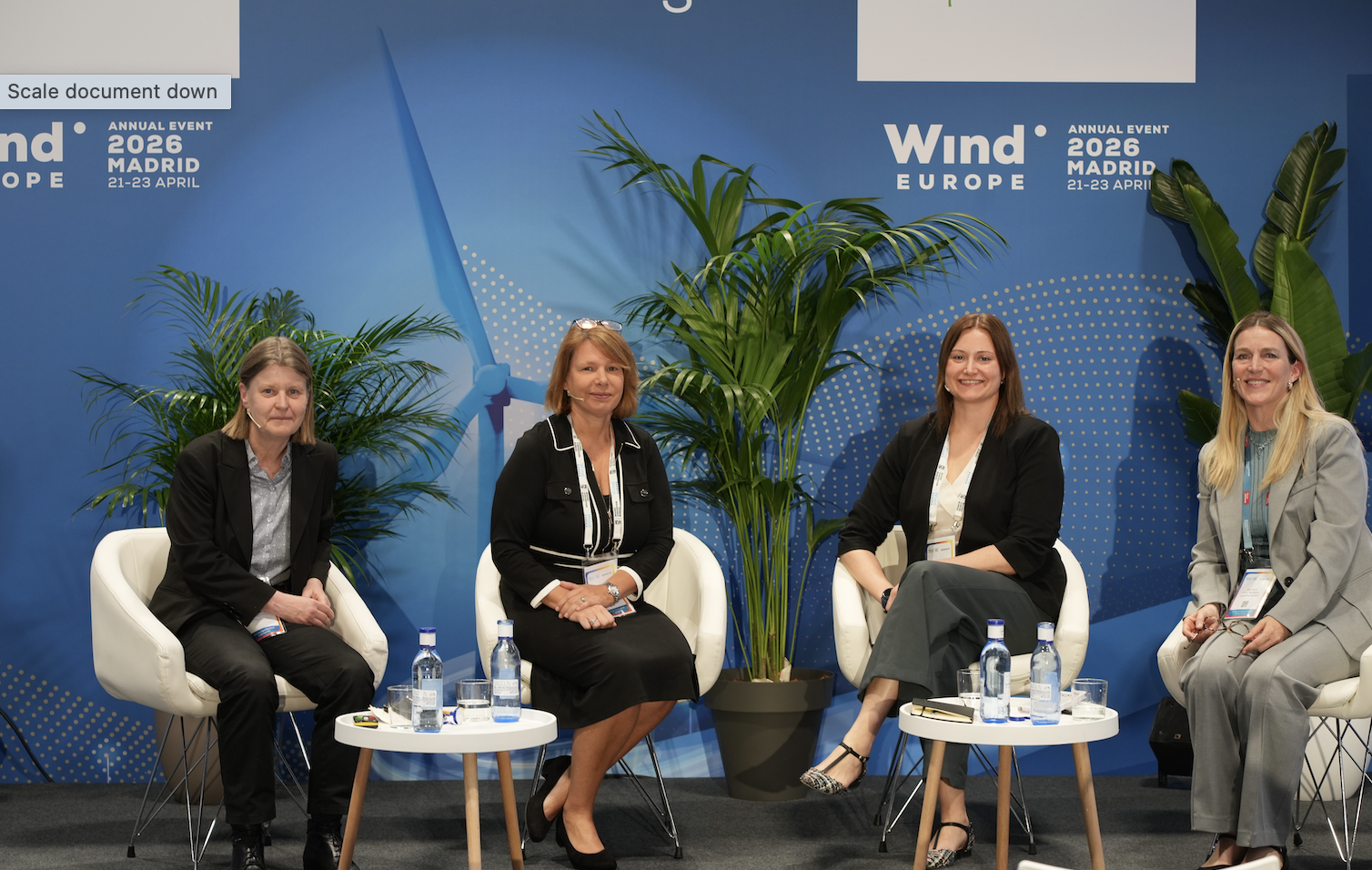
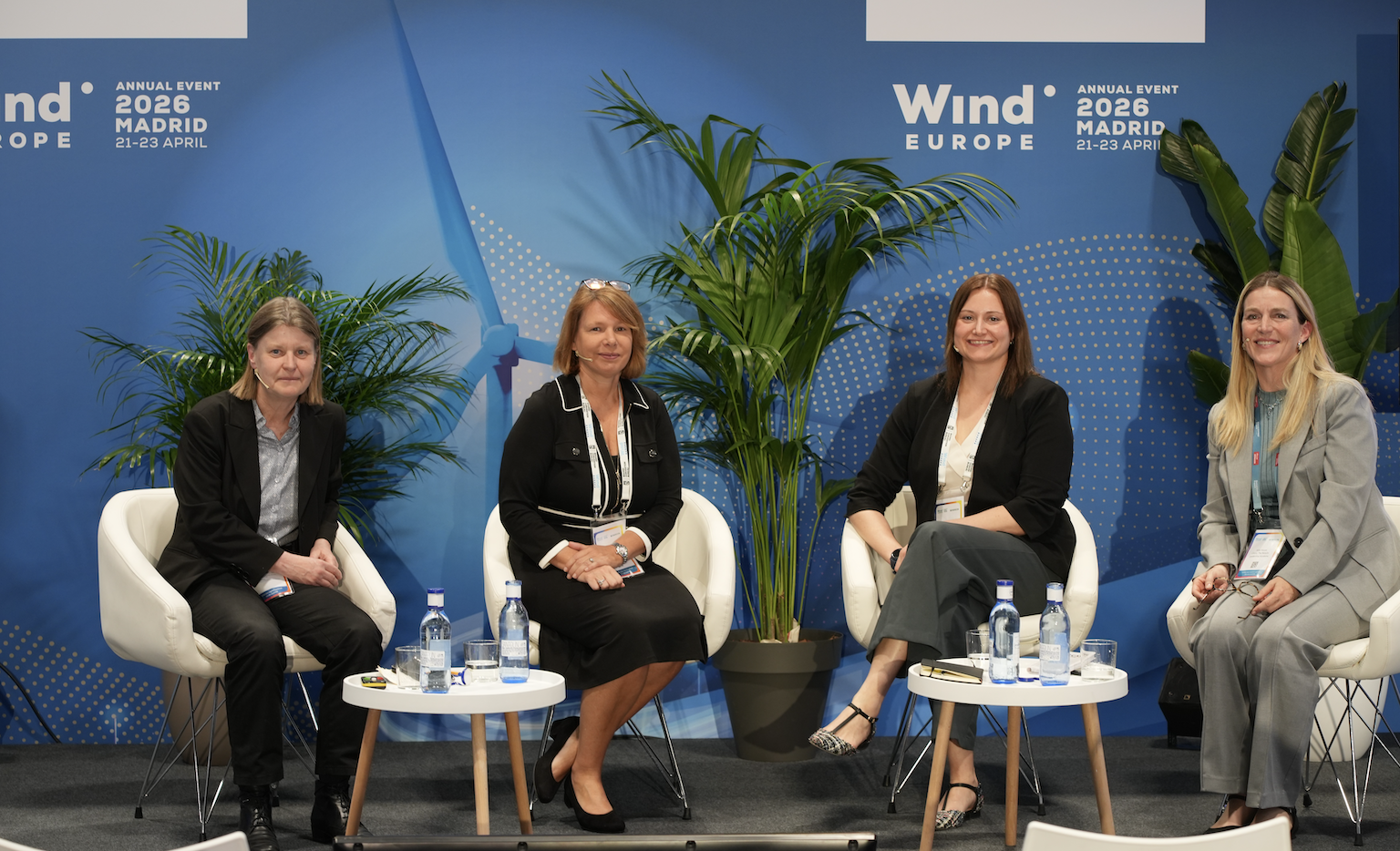
Last week at WindEurope 2026, CAVU Safety, Performance & Leadership Coach Julie House participated in the “Health and Safety Reimagined” panel discussion, an interactive session focused on how the wind industry can continue to strengthen safety performance in increasingly complex operational environments.
The panel brought together leaders from across the industry, including Annette Niehaus, Partner at ERM; Julie Brown, Head of Training Development at Global Wind Organisation; Marta Januszewska, New Markets and New Services Lead at Oil Spill Response Ltd.; and Julie House representing CAVU. The 45-minute session used a staged incident scenario, audience participation through Slido questions, and expert reactions from the panelists to explore what really drives safety outcomes in the field.
The panel centered around a realistic wind turbine incident scenario involving work at height, a dropped materials cage, and an injured worker on the ground below. As the scenario unfolded, the discussion moved beyond the immediate event and examined the deeper operational factors that often sit beneath serious incidents: competency, worn equipment, decision-making under pressure, simultaneous operations, leadership expectations, and whether team members feel safe enough to speak up.
For CAVU, this is where safety leadership becomes critical. Technical controls, procedures, and inspections matter, but they are only part of the system. High-reliability teams also need leaders who create the conditions for trust, communication, learning, and assertive action before small issues become serious events.
One part of the scenario included a young worker who noticed that work was being conducted directly below an elevated work platform but did not speak up because the culture did not support it. That moment is an important reminder for leaders in high-risk industries: a team member’s silence is not always agreement. Sometimes it is uncertainty. Sometimes it is fear of ridicule. Sometimes it is a learned belief that raising concerns will not change anything.
Strong safety leadership changes that. Leaders set the tone for whether questions are welcomed, concerns are acted on, and workers believe they have both the authority and responsibility to stop and reassess when something does not look right.
Julie’s portion of the panel focused on “Reimagining Safety Leadership,” with an emphasis on leadership culture, psychological safety, and Crew Resource Management. CRM provides teams with practical skills for improving performance in complex, high-consequence environments, including leadership, communication, teamwork, situational awareness, decision-making, and human factors.
In the wind industry, these skills are not abstract leadership concepts. They show up in moments like pre-job planning, handovers, weather decisions, simultaneous operations, equipment concerns, and whether a younger or less experienced worker feels confident enough to challenge a decision.
The panel also created space to discuss fatigue and its impact on human performance. Fatigue is not just a wellness issue. It affects cognitive function, decision-making, risk recognition, and communication. When people are tired, rushed, or under pressure to complete work before changing weather conditions, their ability to assess risk and challenge assumptions can be compromised.
Leaders must be able to recognize those conditions and build systems that help teams pause, reassess, and recover before an error becomes an incident. CRM gives teams a shared language for doing exactly that.
One of the strongest takeaways from the session came near the end of the scenario: if the underlying issues had been identified through a trust-based audit designed as a learning exercise rather than a simple inspection, the event may have been prevented.
That distinction matters.
An inspection may find what is out of compliance. A learning-focused audit helps leaders understand why conditions exist, what pressures teams are facing, what workarounds have become normalized, and where the system is making safe work harder than it needs to be.
In the panel scenario, workers had already noticed that the bolts used to secure platforms were easily worn and difficult to replace with better-quality equipment. They had mentioned it before but did not believe leadership considered it a serious issue. That kind of insight is exactly what leaders need to uncover before it contributes to an incident.
The wind industry continues to grow rapidly, and with that growth comes the responsibility to keep improving how teams plan, communicate, lead, and learn. Reimagining health and safety does not mean replacing the fundamentals. It means strengthening them with leadership behaviors that build trust, encourage speak-up culture, and make learning part of everyday operations.
At CAVU, we believe high-reliability teams are built before the pressure moment. They are built through clear expectations, strong leadership, shared language, disciplined communication, and the ability to learn from normal work before failure occurs.
Julie and the other panelists brought this message to life at WindEurope, helping advance an important conversation for the future of safety leadership in wind.


© 2024 CAVU. All rights reserved. Site Design by Former Colleagues
