

close

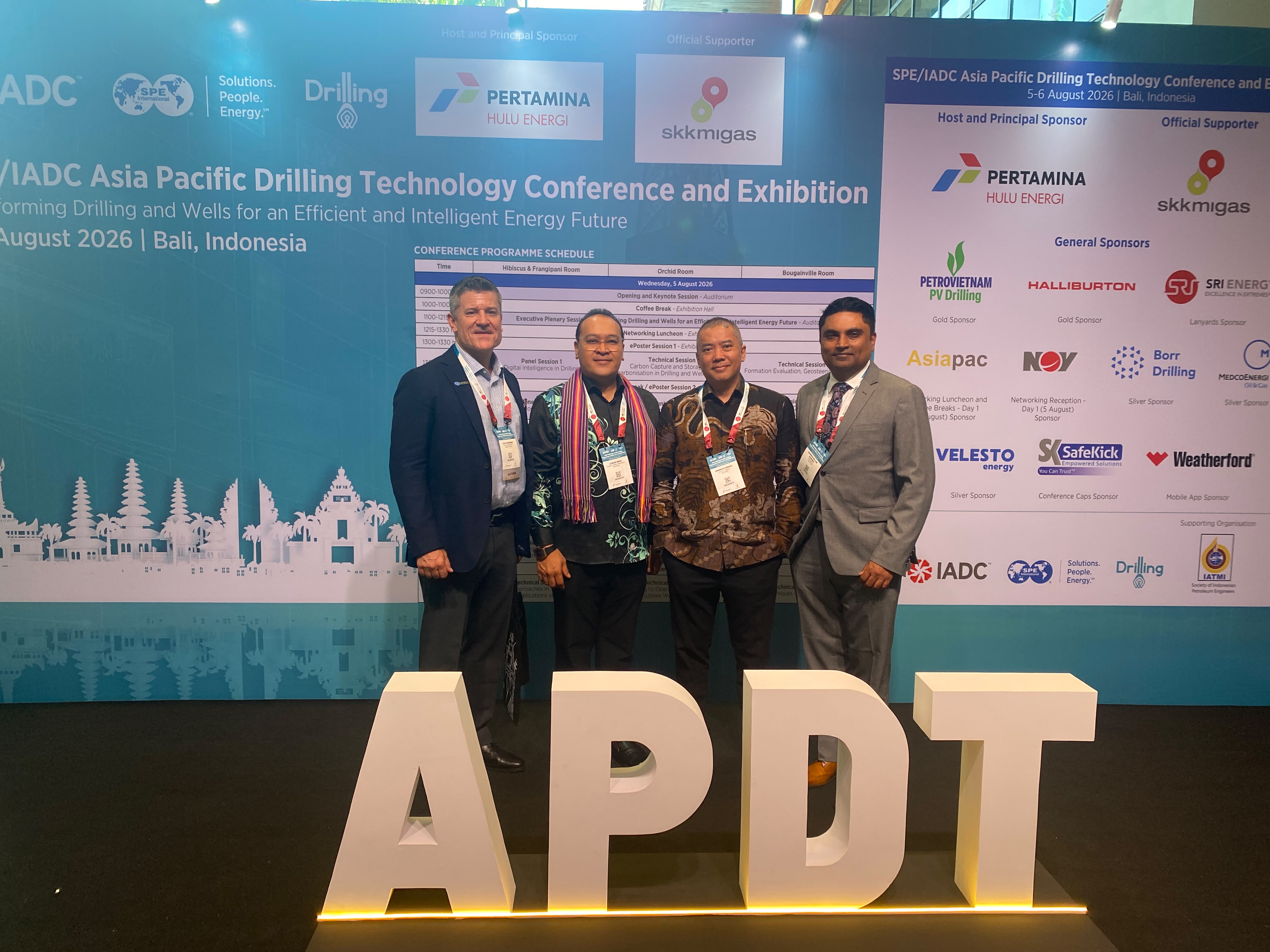
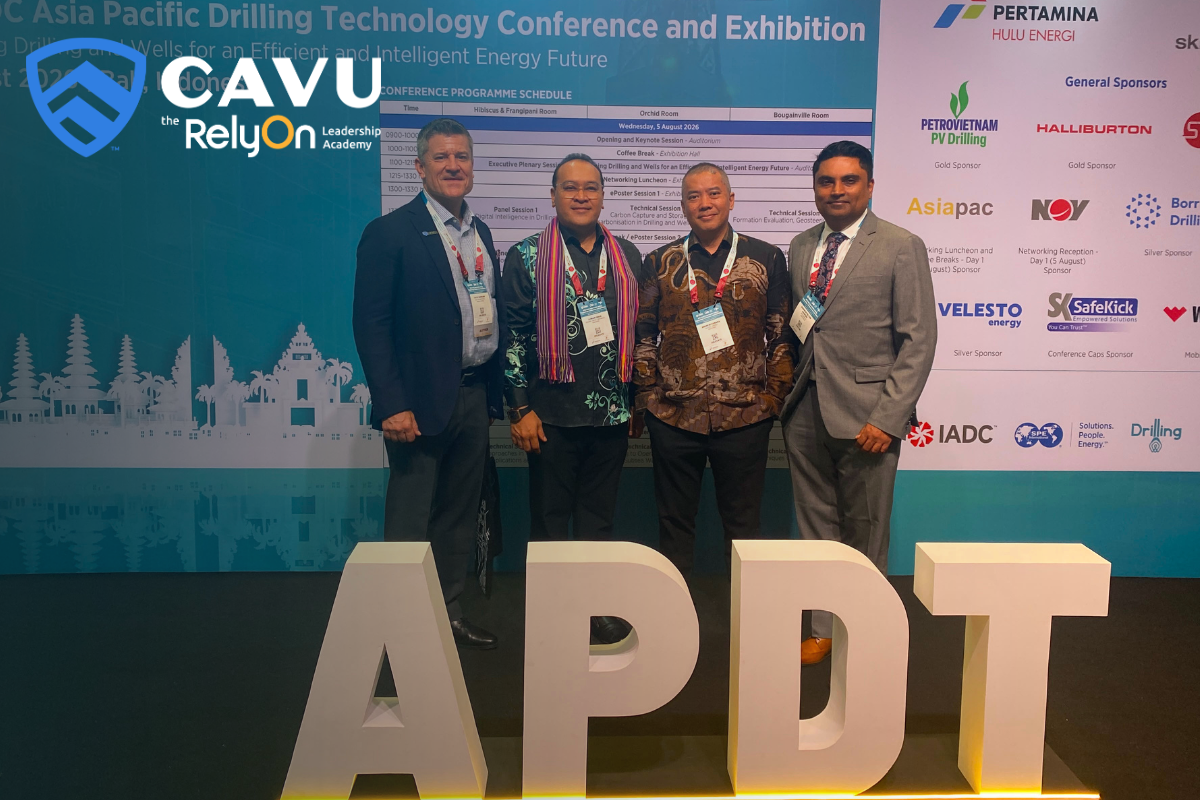
CAVU was proud to participate in the 2026 SPE/IADC Asia Pacific Drilling Technology Conference, held August 5–6 in Bali, Indonesia. The conference brought together drilling professionals, operators, contractors, and industry leaders to exchange knowledge and share approaches for improving safety, reliability, and performance across drilling operations.
CAVU’s Dave Ehrmann represented our team throughout the conference, connecting with industry colleagues and participating in conversations around leadership, Human Performance, Crew Resource Management (CRM), and Operational Excellence.
A highlight of the conference was the presentation of the co-authored technical paper, “Back to the Future: Transformational Steps in Operational Leadership, Human Performance, and Crew Resource Management in Banyu Urip Drilling Operations.”
The paper was co-authored by ExxonMobil Cepu Ltd. and CAVU International and presented at the conference by Hadantha “Aan” Sunarto, Senior Engineer with ExxonMobil Indonesia, during the technical session on Well Technology, Risk Management and HSE in Drilling Operations.
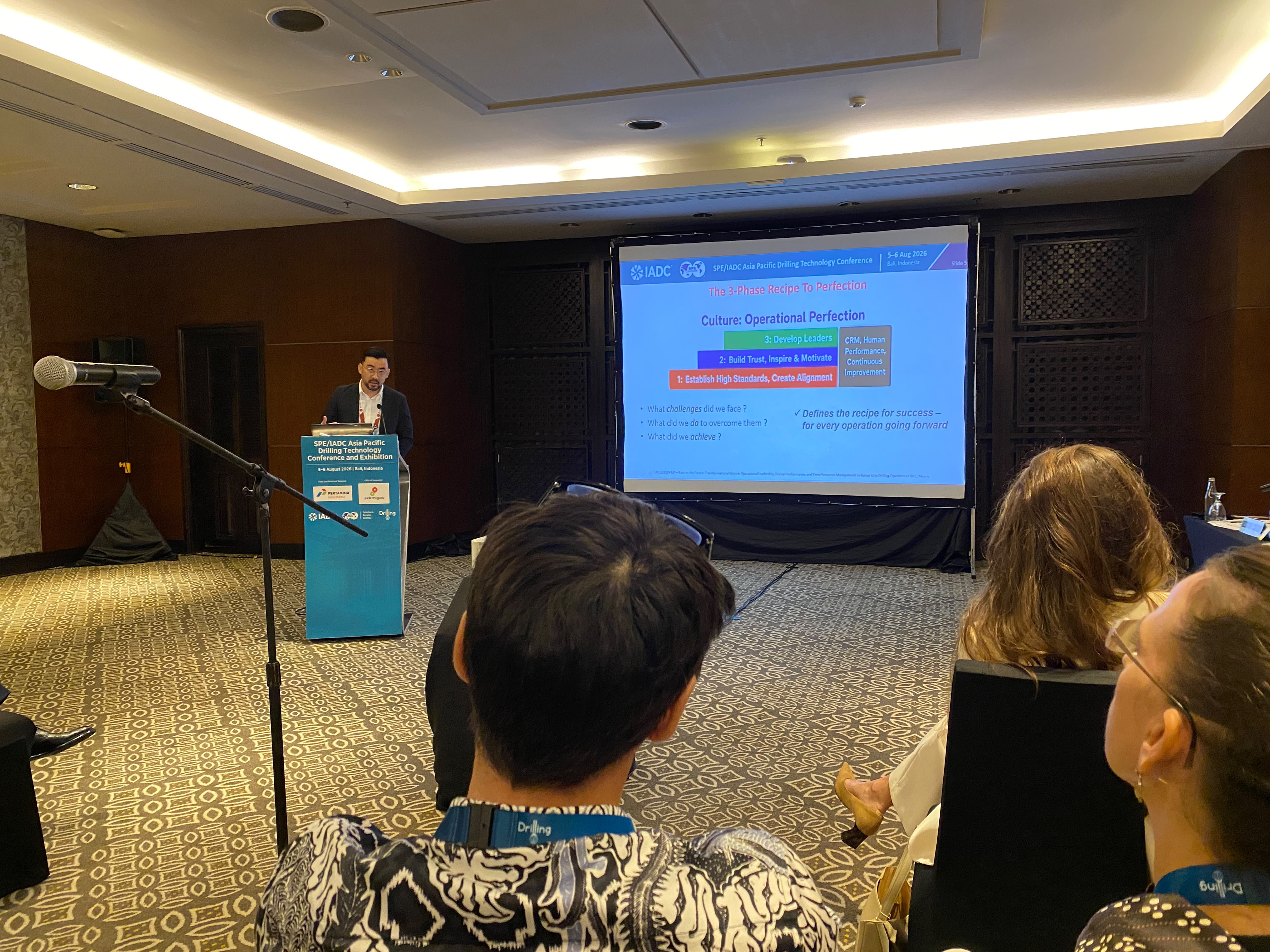
The paper examines the 2023–2025 Banyu Urip Infill Clastic drilling program in Indonesia and the structured approach used to strengthen leadership, Human Performance, and Crew Resource Management across a complex, multicultural drilling environment.
At the center of the work was an understanding that technical processes and procedures alone do not determine operational outcomes. How people lead, communicate, make decisions, maintain situational awareness, work together, and respond to Human Factors can have a significant impact on the way work is performed.
CAVU coaches worked alongside personnel in the field, embedding practical leadership and CRM principles into everyday operations. Rather than treating leadership development as a standalone training event, the approach incorporated ongoing coaching, observation, feedback, and reinforcement into the work itself.
An important part of the Banyu Urip story is the role that trust and workforce ownership played in strengthening the operating culture.
Teams were given practical tools to improve planning, communication, teamwork, decision-making, and situational awareness. Leaders were coached to create an environment where people could contribute, raise concerns, share observations, and learn openly from the work being performed.
Planning, briefing, execution, and debriefing created a disciplined rhythm for teams to align before work, maintain awareness during execution, and capture lessons afterward. Those lessons could then be carried into future operations, creating a continuous cycle of learning and improvement.
Over time, these practices helped reinforce greater ownership and accountability throughout the workforce while strengthening the leadership behaviors and team dynamics required in a high-risk operating environment.
The results of the campaign demonstrate the connection between strong leadership, Human Performance, disciplined execution, and operational outcomes.
Across 701 operational days, 660 were classified as near-perfect days, representing 94% of the campaign. The workforce completed more than 2.2 million hours without an HSSE or process safety incident.
The operational results were equally significant. First oil was delivered 12 months ahead of plan, and full production was achieved 10 months ahead of schedule. The rig was also recognized as the safest in the contractor’s 48-rig fleet.
These outcomes were not attributed to a single tool, course, or initiative. The Banyu Urip case study instead demonstrates the value of consistently reinforcing leadership fundamentals, Human Performance principles, CRM skills, coaching, and continuous learning throughout an operation.
The SPE/IADC Asia Pacific Drilling Technology Conference provided an important opportunity to share those lessons with the broader drilling community.
For CAVU, the Banyu Urip case study reinforces a principle that has guided our work across high-hazard industries: sustainable performance is built through people. Strong processes matter, but they are ultimately carried out by teams operating in complex environments, often under pressure and changing conditions.
Developing leaders, strengthening team behaviors, understanding Human Factors, building trust, and creating a culture of continuous learning can help organizations improve not only how safely work is performed, but how effectively it is executed.
We are proud to have collaborated with ExxonMobil on this work and to see the lessons from Banyu Urip shared with the industry at SPE/IADC.
Thank you to Hadantha “Aan” Sunarto for presenting the paper and sharing the Banyu Urip story, and to everyone who connected with Dave Ehrmann throughout the conference.


© 2024 CAVU. All rights reserved. Site Design by Former Colleagues
